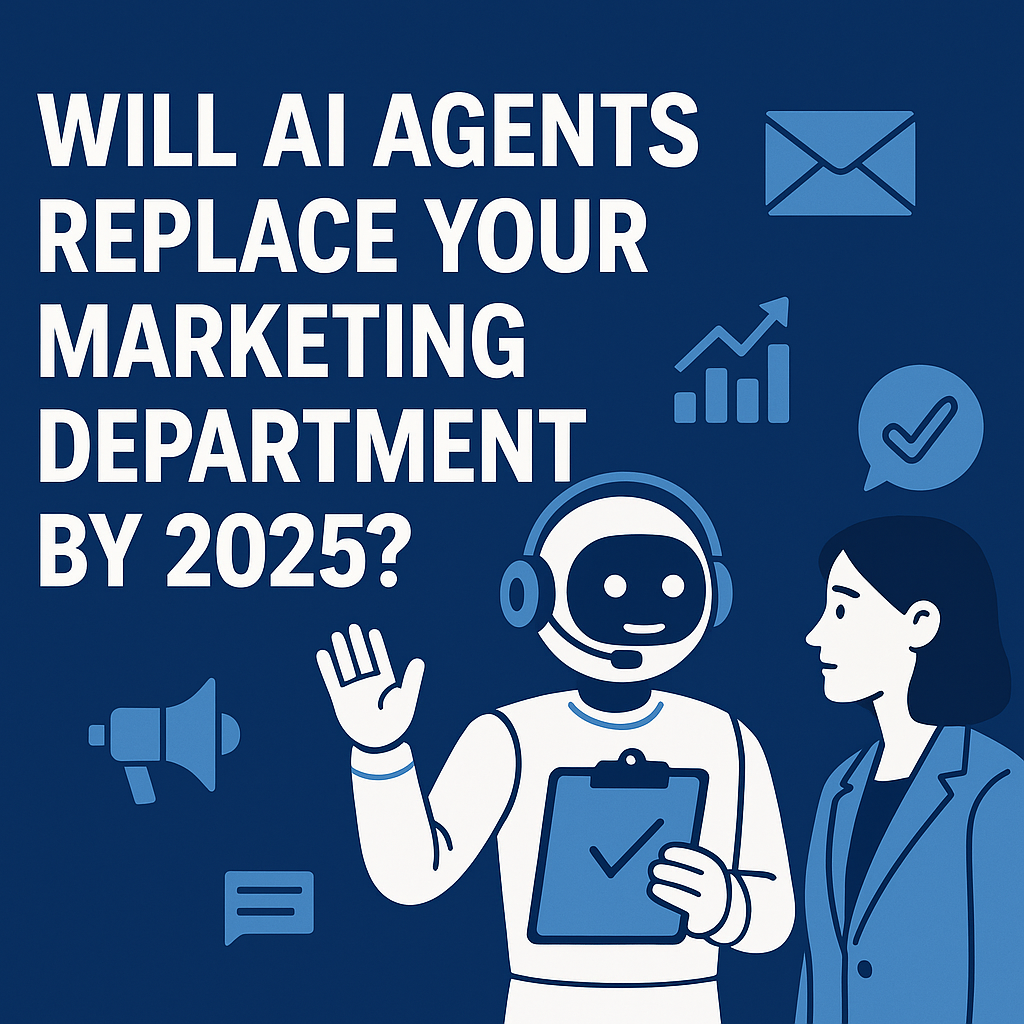
Will AI Agents Replace Your Marketing Department by 2025?
Will AI Agents Replace Your Marketing Department by 2025?
The marketing department of 2026 won't look anything like today's. That's not speculation—it's already happening.
As the founder of Ascendea, I've watched AI evolve from basic automation to something far more profound: autonomous agents capable of independent action. What started as simple chatbots has transformed into systems that can think, decide, and execute without human intervention.
OpenAI's Greg Brockman recently declared "2025 is the year of agents" on social media. He's right. But what does this mean for your marketing team?
The Rise of Autonomous Marketing Agents
Consider what's already possible. OpenAI has launched Codex, an AI agent that can autonomously handle multiple software engineering tasks simultaneously. It writes code, fixes bugs, and runs tests without human intervention.
Now imagine that same capability applied to marketing. AI agents that independently create campaigns, optimize ad spend, write compelling copy, and analyze results.
This isn't science fiction. It's happening now.
At Ascendea, we're building AI voice agents and marketing automation that give small businesses the capabilities once reserved for enterprises with massive teams. The technology is advancing faster than most realize.
What Marketing Tasks Can AI Agents Handle?
AI agents are already transitioning from assistance to autonomy. OpenAI's Operator can browse the web and use software in virtual environments to complete complex user requests with minimal human guidance.
Applied to marketing, these agents can:
Research and analyze market trends, competitor activities, and customer behavior patterns in real-time
Generate and optimize content across channels, from email sequences to social media posts
Manage campaigns by adjusting budgets, targeting, and creative elements based on performance data
Conduct A/B testing at scale, implementing winners automatically
Personalize customer journeys through dynamic content adaptation
The most advanced systems can even develop strategic recommendations based on business objectives and market conditions.
The Human Element in an AI-Driven Marketing World
Does this mean human marketers will become obsolete? Absolutely not.
What's changing is the nature of marketing work. Repetitive tasks, data analysis, and execution will increasingly shift to AI agents. Human marketers will focus on strategy, creativity, emotional intelligence, and ethical oversight.
The most successful marketing teams will be those that effectively collaborate with AI agents rather than compete against them.
I believe marketing departments will evolve into smaller, more strategic teams that direct and oversee multiple AI agents handling specialized functions. The human marketers who thrive will be those who understand how to prompt, guide, and leverage these autonomous systems.
Preparing Your Marketing Team for the Age of Agents
For business owners and marketing leaders, the time to adapt is now. Here's how to prepare:
Audit your marketing processes to identify which tasks could be handled by current AI tools
Invest in AI literacy for your team, focusing on prompt engineering and AI oversight skills
Experiment with available AI agents to understand their capabilities and limitations
Redefine roles to emphasize strategy, creativity, and AI management
Build ethical frameworks for AI deployment in your marketing activities
At Ascendea, we're helping small and medium businesses navigate this transition with our AI-powered CRM and voice automation platform. Our goal is to make these powerful technologies accessible to companies of all sizes, not just enterprises with massive budgets.
The Future Belongs to the Adaptable
The question isn't whether AI agents will transform marketing departments—it's how quickly and completely the change will happen.
By 2025, I predict that at least 50% of tactical marketing tasks will be handled by autonomous agents. By 2026, we'll see the first fully agent-managed campaigns outperforming human-led initiatives in specific sectors.
The marketers who thrive won't be those with the most technical skills or the biggest budgets. They'll be the ones who can articulate clear goals, provide thoughtful oversight, and form effective partnerships with increasingly capable AI systems.
The future of marketing isn't human vs. machine. It's humans and machines, working together in ways we're just beginning to imagine.
Are you ready?
